 LOOKSMAXXING
The Complete Body Looksmaxxing Guide: Recomp, Lifting, Posture & Debloating
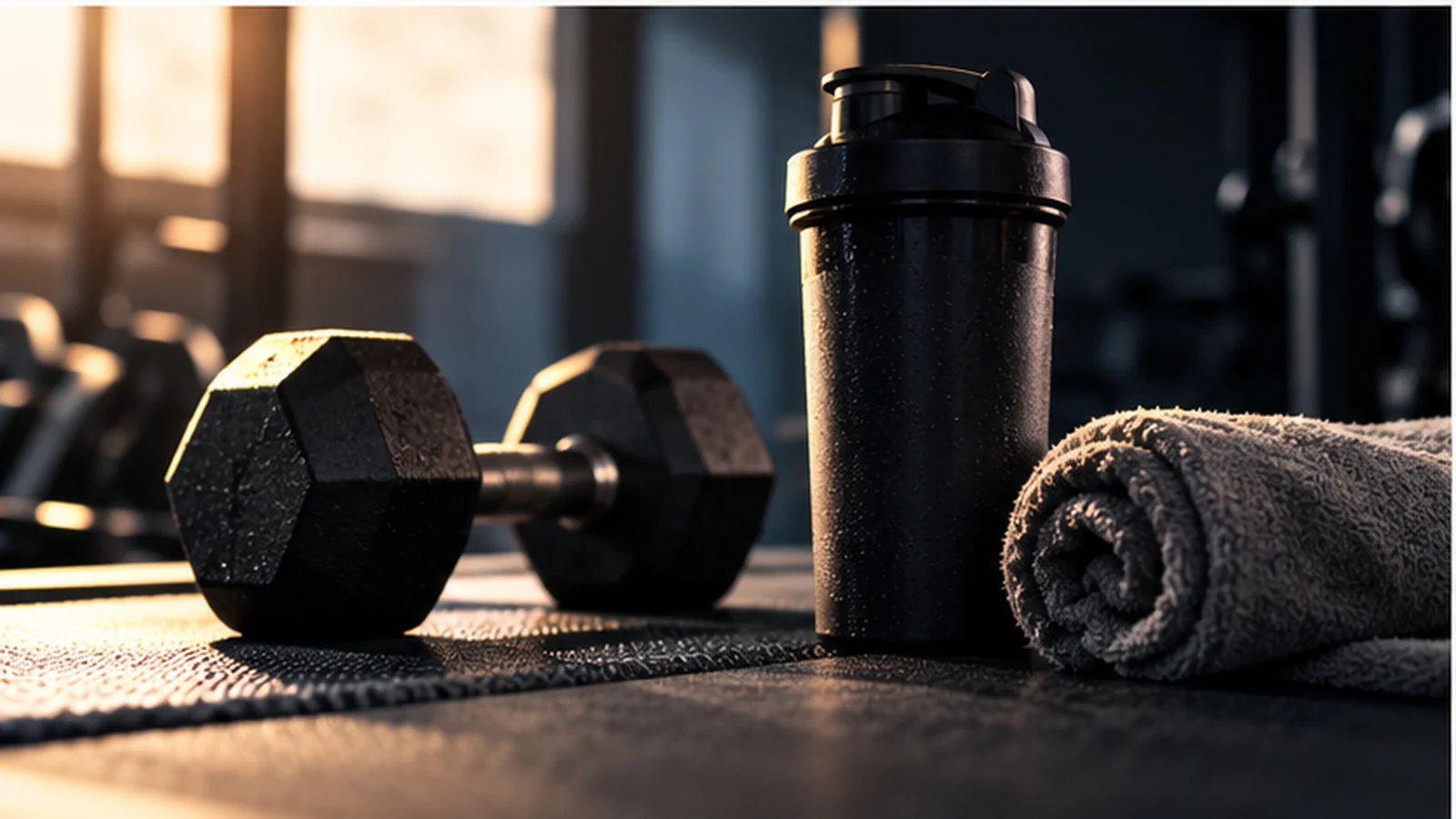
Your body changes how your face is read. Leanness affects facial definition; shoulders and upper back change your silhouette; posture changes how the neck and jaw present; sleep and recovery determine whether the whole project is sustainable. The best body plan is not "get huge" or "get shredded." It is build a stronger frame while moving body fat in the direction that fits your starting point.
1. Decide the job: recomp, cut, or gain
Most confusion comes from trying to run all three goals aggressively at once. Pick the lane that matches your starting point.
| Starting point | Primary goal | What that means |
|---|---|---|
| New or returning lifter, moderate body fat | Recomposition | Lift progressively, eat plenty of protein, keep calories around maintenance or a small deficit, let beginner gains do work. |
| Carrying clearly more fat than you want | Slow cut | Modest calorie deficit, keep lifting, maintain protein, expect the face and waist to change together. |
| Already lean and under-muscled | Controlled gain | Small calorie surplus, progressive training, accept a slow scale increase rather than a "dirty bulk." |
| Already lean and muscular enough | Maintain | Stop turning every month into a new phase. Maintain strength, steps/cardio, sleep and a stable diet. |
The facial side of this matters because facial adiposity is perceptible. But chasing the lowest possible body fat can backfire through worse training, sleep, mood, hormones, food obsession, and a drawn appearance. Aim for sustainable, not stage-lean.
2. Lifting for the frame people actually see
The biggest visual payoff for most men comes from building a balanced upper frame while not neglecting legs. Shoulders, lats, upper chest, arms, glutes, and legs change how clothes hang and make the waist look smaller without requiring you to starve it smaller.
Delts
Overhead pressing plus lateral-raise work builds shoulder width.
Lats + upper back
Rows and vertical pulls add width and improve the frame behind the neck and shoulders.
Upper chest + arms
Pressing, curls and triceps work fill shirts without needing novelty exercises.
Glutes + legs
Squat/lunge/hinge patterns keep proportions athletic and support long-term strength.
A simple 3-day template
| Day | Main lifts | Accessories |
|---|---|---|
| A | Squat or leg press, bench press, row | Lateral raise, curls, calves |
| B | Romanian deadlift, overhead press, pulldown/pull-up | Triceps, rear delts, abs |
| C | Split squat, incline press, chest-supported row | Lateral raise, curls, hamstring curl |
Use exercises you can perform pain-free with stable technique. Add reps or load over time. You do not need failure on every set, and you do not need a different exercise for every muscle fiber. Consistent hard training beats novelty.
Pick a rep range, for example 6-10 on a main lift. When you can hit the top of the range with good form across your planned sets, add a small amount of weight and repeat.
3. Nutrition: enough structure, not a new religion
Protein
Protein supports muscle gain and retention during resistance training. A large meta-analysis found benefits from higher protein intake during training, with gains leveling off around roughly 1.6 g/kg/day in the analyzed data. You do not need to force-feed protein beyond the point where it displaces the rest of a normal diet.
Calories
For fat loss, the core requirement is a sustained calorie deficit. For muscle gain, a small surplus can help. In practice, use the scale trend, waist measurement, gym performance, hunger, and photos together. A single daily weigh-in means very little because water and food mass move the number constantly.
Food quality
Build most meals around protein, fruit/vegetables, high-fiber carbs, and fats you tolerate well. Leave room for foods you enjoy. A diet that makes you socially miserable and hungry every day is not a strong long-term appearance strategy.
Supplements
Most of the visible result is training, calories, protein, sleep, and time. Creatine monohydrate is one of the better-supported sports supplements for strength and lean mass, but it is optional. "Fat burners" are not a substitute for the energy balance problem and can add stimulant side effects.
4. Posture, neck and presence
Posture is not a magic skeletal correction, but it changes presentation immediately. If your head lives six inches in front of your torso, the neck looks shorter, the jaw angle is less clean, and clothes sit differently. The fix is partly training and partly environment.
- Raise the screen: stop spending eight hours with your head pitched down.
- Train the upper back: rows, pulldowns, rear-delt work and loaded carries support a stronger resting position.
- Open what is stiff: short daily chest/hip-flexor mobility is more useful than an elaborate "posture protocol" you will not do.
- Walk: regular walking is cardio, recovery, energy expenditure, and practice carrying yourself upright.
Direct neck training can build the neck, but it deserves conservative loading and good technique. Avoid aggressive neck bridges or improvised heavy harness work if you do not know what you are doing. Pain, tingling, dizziness, or radiating symptoms mean stop.
5. Debloating is not fat loss
The scale can move several pounds in a few days because of glycogen, sodium, food volume, bowel contents, travel, and water. Your face can move with some of that. That is why a salty late dinner can make you look different the next morning without adding meaningful body fat overnight.
Use our 14-Day Facial Debloat Protocol if puffiness is the main issue. The safe version is consistent sleep, normal hydration, a stable diet, moderate alcohol, and avoiding giant swings in sodium. It is not dehydration, laxatives, or diuretics.
6. Cardio does not kill gains
Cardio supports health, work capacity, and calorie management. The interference problem is often overstated for normal recreational training. If muscle is the priority, keep most cardio easy to moderate, separate very hard endurance sessions from demanding leg sessions when practical, and eat enough to recover.
A simple target is regular walking plus two or three short cardio sessions per week. If you play a sport, that counts. You do not need to live on a treadmill to get lean.
7. Training volume, intensity and recovery
You do not need a perfect evidence spreadsheet to train well. Most muscles respond to multiple hard sets per week, but the useful amount depends on experience, exercise selection, sleep, calories and how close you train to failure. Start with enough work to progress and add only when progress stalls and recovery is good.
- Main lifts: usually stop with 1-3 good reps left in the tank on most sets. Grinding every set to failure adds fatigue fast.
- Isolation lifts: can be taken closer to failure more often because the systemic cost is lower.
- Rest: use enough rest between hard sets to repeat useful performance. One-minute rests are not morally superior if they turn strength work into cardio.
- Deloads: not mandatory on a calendar, but a lower-stress week can help when joints ache, performance drops and motivation tanks at the same time.
Recovery is where the face connects back to the body plan. Chronic sleep restriction can make you look more tired while also making training and appetite management harder. If the routine requires six hours of sleep so you can fit in an extra workout, the extra workout is probably the wrong trade.
8. How to measure progress without being fooled by water
Use trends, not single points. Weigh under similar conditions if you weigh at all, then use a weekly average. Measure waist at the same anatomical point. Take monthly front/side/back photos. Log a handful of anchor lifts. These four measures tell you more than a smart scale's daily body-fat estimate.
Scale trend
Useful for energy-balance direction; noisy day to day.
Waist
Useful for fat-loss trend and recomp when scale weight is stable.
Photos
Useful for proportions, posture and the face/body relationship.
Strength log
Useful proxy that the training stimulus is progressing.
9. Home training vs gym
A gym makes progressive loading convenient, but it is not the only route. Adjustable dumbbells, a bench, resistance bands and a pull-up option can cover a large amount of productive training. The key is that the exercises remain challenging as you improve. If your home setup tops out at twenty easy reps on everything, you need harder variations, more load, or gym access.
For people intimidated by gyms, three months of simple home training can build enough competence to make the transition easy. Do not let the perfect environment become the reason you never start.
10. Common body looksmaxxing mistakes
- Cutting before you have muscle: you can end up smaller without looking more athletic. Beginners often do better with recomp.
- Bulking too fast: rapid scale gain is not rapid muscle gain. A large surplus mostly buys more future cutting.
- Skipping legs: makes proportions look less athletic and limits useful strength.
- Program hopping: you cannot measure progression if every week is a new workout.
- Chasing a body-fat number: consumer estimates can be wildly noisy. Use appearance, waist, health and performance together.
- Using dehydration for definition: a temporary photo trick with real downside, not a body-composition strategy.
The 12-week body plan
- Week 1: choose recomp/cut/gain, record body weight 3-7 mornings, waist, and basic photos. Establish a sleep window.
- Weeks 1-4: run the 3-day lifting template or another balanced program. Walk daily. Get protein into 3-4 meals instead of chasing a perfect macro app score.
- Week 4: adjust calories only if the 3-week trend is clearly wrong. Do not react to two weird weigh-ins.
- Weeks 5-8: keep exercises stable enough to measure progression. Add load/reps when earned.
- Weeks 9-12: compare waist, photos and strength. If you are stronger, proportions are improving, and the trend matches the goal, keep going. Do not switch programs because you got bored on TikTok.
Stop the cut or aggressive training plan and get help if you are fainting, losing control around food, injured, persistently exhausted, or watching the scale become the only part of the project you care about.
See why body composition sits so high in The Looksmaxxing Hierarchy, then use the Face Guide to connect the body changes to facial presentation.
Selected references
- Morton RW, et al. A systematic review, meta-analysis and meta-regression of the effect of protein supplementation on resistance training-induced gains in muscle mass and strength. Br J Sports Med. 2018;52:376-384. PubMed.
- Coetzee V, Perrett DI, Stephen ID. Facial adiposity: a cue to health? Perception. 2009;38(11):1700-1711. PubMed.
- Axelsson J, et al. Beauty sleep: experimental study on the perceived health and attractiveness of sleep deprived people. BMJ. 2010;341:c6614. BMJ.