 LOOKSMAXXING
The Complete Grooming & Style Guide: Hair, Hairline, Beard, Brows & Wardrobe
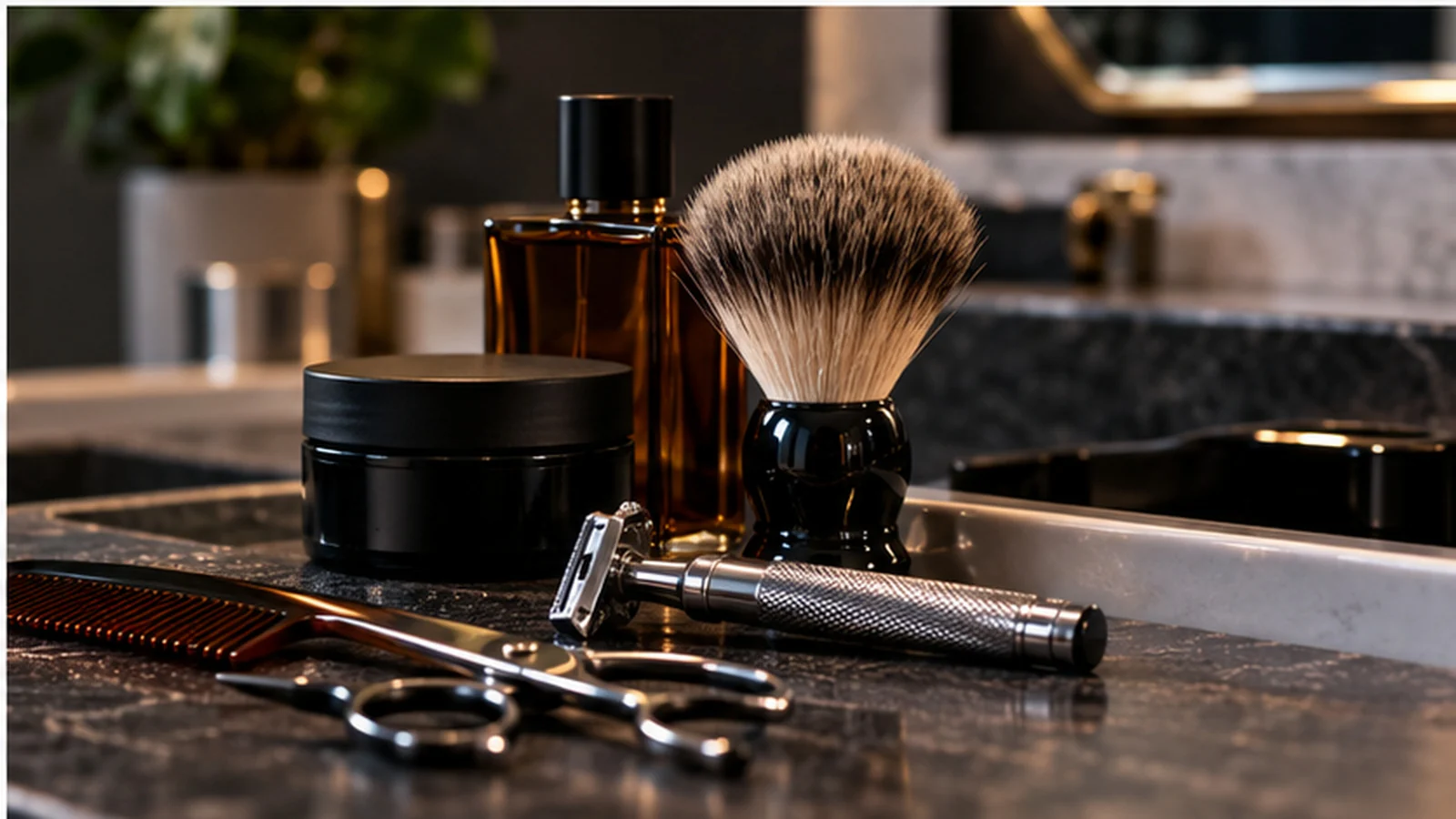
Grooming and style are the fastest part of looksmaxxing because they change the frame without waiting for biology. Hair can alter apparent face length today. Brows and facial hair can clean up visual noise in ten minutes. Better-fitting clothes can make the same body look sharper this afternoon. This is the system.
1. Haircut: work with proportions, not a face-shape horoscope
Face-shape charts are useful as a starting language, but your actual proportions matter more than whether an app calls you oval or diamond. Look at three things: how long the face appears, how wide the forehead is relative to the jaw, and how much volume your hair naturally supports.
| If you want to... | Try | Be cautious with |
|---|---|---|
| Make a long face look more balanced | Some width at the sides, moderate top height, fringe/texture if it suits the hairline | Extreme skin fade + tall pompadour |
| Add structure to a rounder face | Cleaner sides, controlled height/texture on top | Heavy width at cheek level |
| Soften a very angular face | Texture, movement, less geometric edges | Hard boxy lines everywhere |
| Work with a mature/receding hairline | Short textured styles, crop, buzz if appropriate, styling that does not depend on hiding the temples | Long thin strands combed across recession |
Bring your barber two or three references with hair texture close to yours. Ask what will work with your growth pattern, cowlicks, density, maintenance tolerance, and hairline. The best cut is one you can reproduce on a normal morning.
"I want this general shape, but make it work with my density and growth pattern. I can spend about five minutes styling it. What would you change?" That is a better conversation than naming a face shape and demanding a template.
2. Hairline strategy: early recognition beats denial
Hair loss is where grooming overlaps medicine. If you are seeing progressive temple recession, crown thinning, or miniaturization, document it under the same lighting and consider a dermatologist. Androgenetic alopecia is common and has evidence-based treatments. A systematic review found benefit for minoxidil and finasteride in men compared with placebo, among other options studied.
That does not mean medication is mandatory or risk-free. Finasteride is a prescription drug with potential adverse effects and deserves an informed conversation with a clinician. Topical minoxidil also has side effects and requires ongoing use to maintain benefit. The key point is that real hair-loss treatment is different from buying a mystery serum because an influencer said it "blocks DHT naturally."
No clear progression
Pick a flattering cut, stop inspecting the corners under five lighting conditions, and recheck photos every few months.
Clear progression
Get a clinician to confirm the cause early, when more hair is still present to preserve.
3. Beard, shaving and eyebrows
Facial hair
Facial hair is useful because it is adjustable geometry. The goal is not "grow the most beard." The goal is a deliberate outline.
- Dense beard: use shape and length to balance the face. Keep the neckline clean and avoid ballooning the cheeks.
- Patchy beard: short stubble often looks stronger than long sparse growth.
- Weak chin you want to balance: a little more length at the chin can help if density supports it.
- Already long face: do not add a giant point under the chin just because you can.
Eyebrows
Brows frame the eyes. For most men, the high-return move is cleanup, not redesign. Remove obvious hairs between the brows, trim extreme length, and leave the natural top line mostly alone. Over-thinning brows can make the face look older or more surprised, and it takes time to grow back.
Shaving
If shaving causes bumps, focus on fewer passes, adequate lubrication, a clean sharp blade, and shaving with the grain. Your skin guide has the longer irritation section: Complete Skin Looksmaxxing Guide.
4. Wardrobe: fit first, then color, then everything else
You do not need a fashion identity before you can dress better. Start by removing obvious fit errors. Shoulder seams should land near your actual shoulder. Sleeves should not eat your hands. Pants should not stack like an accordion unless that is a deliberate style. T-shirts should follow your torso rather than hang like a rectangle or vacuum-seal it.
The 12-piece starter system
| Category | Simple starting point | Why |
|---|---|---|
| Tops | 3-4 well-fitting tees, 2 casual button shirts/overshirts | Easy layering; fit is obvious |
| Bottoms | Dark jeans, neutral chinos/trousers, one casual option | Covers most normal settings |
| Outer layer | One jacket that fits the shoulders cleanly | Adds structure instantly |
| Shoes | Clean minimal sneaker + one smarter pair | Stops good outfits ending in beat-up footwear |
| Accessories | Simple belt/watch if you like them | Finishing, not the foundation |
Color without a theory degree
Pick two or three neutrals you like and that work together, then add one or two accent colors. Repeating a smaller palette makes almost everything combine with almost everything else. You can get more experimental after you have a closet where getting dressed is easy.
Tailoring is the cheat code
Inexpensive clothing with sleeves and hems adjusted to your body often looks better than expensive clothing in the wrong size. Use a tailor for pieces worth keeping. Do not spend $250 replacing a $60 pair of pants before asking whether a small alteration solves the problem.
5. Teeth, nails, scent, glasses and the details people actually notice
- Teeth: hygiene first. Treat dental disease before cosmetic whitening. Avoid abrasive DIY "whitening" hacks.
- Nails: short, clean, no ragged edges. This is five minutes.
- Scent: clean body/clothes first, fragrance second. One or two sprays is usually enough in close environments.
- Glasses: frame width should roughly fit your face; brows usually look better visible rather than buried behind a huge frame. Try several shapes in photos.
- Shoes: clean them. A toothbrush and five minutes can rescue an otherwise good outfit.
- Clothes care: steam/iron obvious wrinkles, de-pill knits, remove stains, and retire stretched collars.
6. Shopping without lighting money on fire
Do not replace the whole wardrobe because you discovered style content. Build from gaps. Photograph five outfits you already own. Identify the single repeating failure: bad pants fit, no layering piece, worn shoes, all tops too large, or colors that never combine. Buy the item that fixes the system rather than the item that is exciting by itself.
When buying online, know your actual garment measurements: chest width, shoulder, sleeve, rise, waist, inseam. Compare those numbers to a piece you already own that fits. "Medium" is not a measurement.
7. Dress for the actual setting
Style gets easier when you stop trying to make one outfit cover every context. Build three lanes: everyday casual, smart casual/date, and formal/professional if your life needs it. Each lane can use the same color palette and some of the same shoes, but the fit and fabric should match the situation.
| Setting | Reliable formula | Upgrade |
|---|---|---|
| Everyday | Clean tee/knit + straight/tapered pants + clean sneaker | Overshirt or lightweight jacket |
| Date / dinner | Textured polo, knit or button shirt + trousers/dark denim | Leather shoe/boot, simple watch |
| Professional | Collared shirt + trousers + appropriate shoe | Structured jacket with correct shoulder fit |
| Hot climate | Breathable tee/linen/cotton blend + lighter trousers/shorts | Texture and fit instead of heavy layering |
Temperature matters. A technically stylish outfit that makes you sweat through the shirt is not a good outfit for the day. Use lighter fabrics and fewer layers in hot climates; the system should work where you actually live.
8. Build a recognizable personal style slowly
Personal style is mostly repeated preferences. Save twenty outfits you genuinely like, then look for what repeats: cropped jackets, monochrome palettes, workwear, clean minimal sneakers, loafers, relaxed trousers, fitted knits. Copy the repeating structure, not the exact brand list.
Then choose one signature element at a time. It might be a type of jacket, a watch, a consistent haircut, a particular shoe silhouette, or a restrained color. Signature does not mean loud. It means the pieces look like they belong to the same person.
9. Maintenance schedule
| Task | Typical rhythm | Why |
|---|---|---|
| Haircut | Every 3-6 weeks depending on style | Maintains the intended silhouette |
| Beard neckline/edges | 1-2 times per week | Prevents the "grew out by accident" look |
| Brows/nose/ear hair | Every 1-3 weeks | Small cleanup, high signal |
| Shoes | Quick clean as needed; deeper clean monthly | Extends life and keeps outfits intentional |
| Closet audit | Each season | Removes stretched, stained and non-fitting pieces |
10. Budget: where to spend and where not to
Spend first on fit-dependent items you wear constantly: shoes, pants, outerwear, haircut, and any tailoring that rescues good basics. Save on logo-driven basics where fabric and fit are already acceptable. Fragrance, watches and accessories are finishing pieces. They should not consume the budget while your shoes are wrecked and every shirt is two sizes off.
Secondhand can be excellent for jackets, denim, wool, leather shoes and higher-quality pieces that are expensive new. The limitation is fit: a bargain that needs impossible shoulder alterations is not a bargain.
The one-week grooming and style reset
- Day 1: book haircut, take hairline reference photos, trim nails, replace dead razor/blade if needed.
- Day 2: beard/shave reset and basic brow cleanup.
- Day 3: try on every pair of pants. Separate "fits now" from "tailor" and "donate."
- Day 4: do the same for tops and jackets. Check shoulders and sleeve length first.
- Day 5: clean shoes, belt, watch, glasses, and grooming tools.
- Day 6: build five complete outfits and photograph them. Fix the weakest repeating element.
- Day 7: buy only the missing piece you can now name precisely.
Do not let a supplement or cosmetic company diagnose hair loss from an ad. Sudden shedding, patchy loss, scalp inflammation, or rapid change can have causes other than androgenetic alopecia and deserves proper evaluation.
Use the Face Guide for jawline, eyes, smile and facial structure, or the Body Guide for the frame under the clothes.